Centrifuges
-
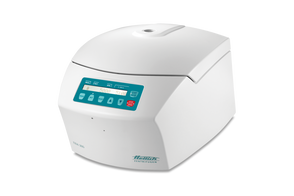
Hettich - 1102-01 - EBA 280S Small Centrifuge, 120V, 60Hz
-
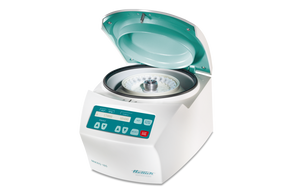
Hettich - 1203-01 - Mikro 185 Microlitre Centrifuge, 120V, 60Hz
-
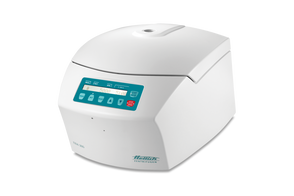
Hettich - 1101-01 - EBA 280 Small Centrifuge, 120V, 60Hz
-
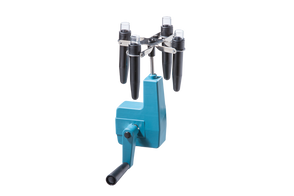
Hettich - 1011 - Manual Handcentrifuge without Rotor
-
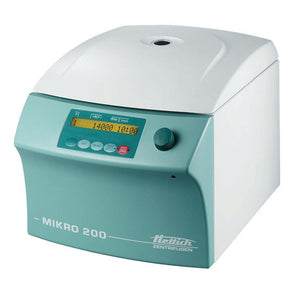
Hettich - 200MICRO30-BC - Mikro 200 Microlitre Centrifuge, Microliter Tube Package 30 (Bio-Containment)
-
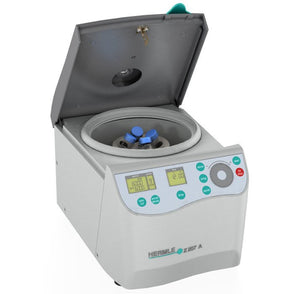
Hermle - Z207-A-CMB-E - Compact Centrifuge Combination Rotor, 230V
-
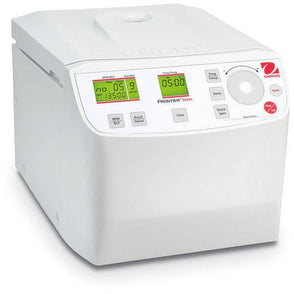
Ohaus - 83041044 - Frontier™ 5000 Benchtop Micro Centrifuge 120V FC5513L+R06
-
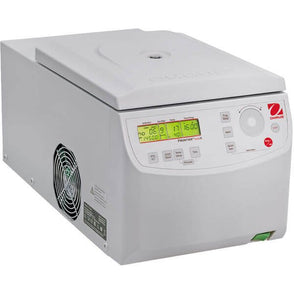
Ohaus - 83041042 - Frontier™ 5000 Benchtop Micro Centrifuge 120V FC5513R
-
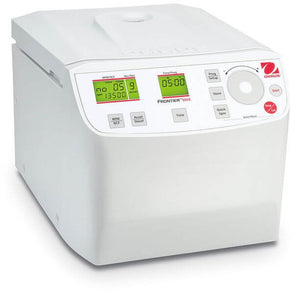
Ohaus - 30393188 - Frontier™ 5000 Benchtop Micro Centrifuge 120V FC5513
-
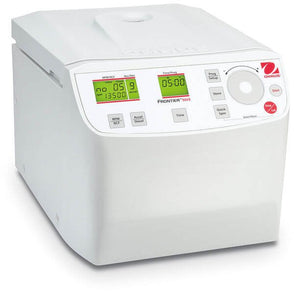
Ohaus - 30370692 - Frontier™ 5000 Benchtop Micro Centrifuges 120V FC5513+R02
-
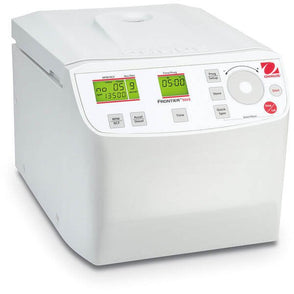
Ohaus - 30370691 - Frontier™ 5000 Benchtop Micro Centrifuges 230V FC5513+R02
-
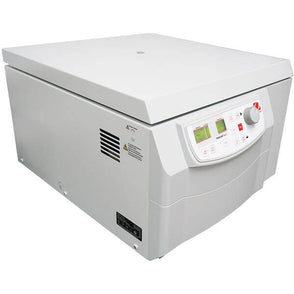
Ohaus - 30553037 - Frontier™ 5000 Series Multi-Pro Centrifuge 120V FC5916
-
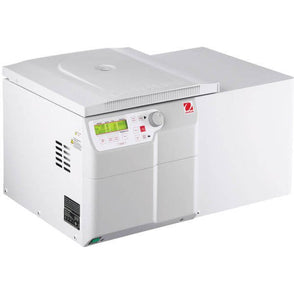
Ohaus - 83041048 - Frontier™ 5000 Multi-Pro Centrifuge 120V FC5830R
-
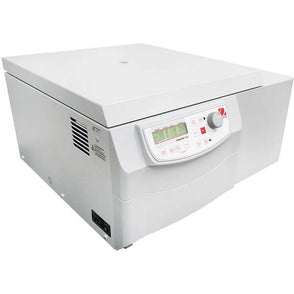
Ohaus - 30553103 - Frontier™ 5000 Series Multi-Pro Centrifuge 120V FC5916R
-
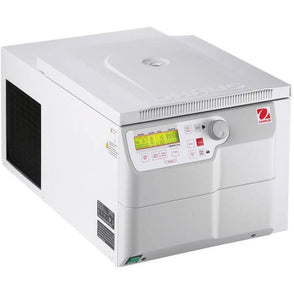
Ohaus - 83041046 - Frontier™ 5000 Multi-Pro Centrifuge 120V FC5720R
-
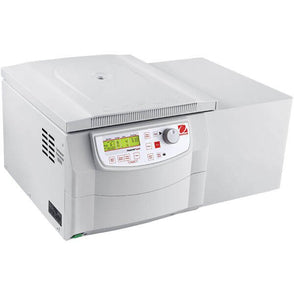
Ohaus - 30314819 - Frontier™ 5000 Multi-Pro Centrifuge 120V FC5816R
-
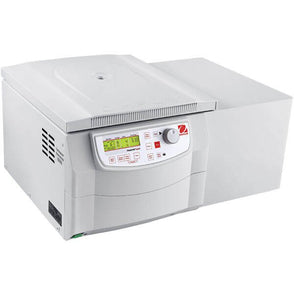
Ohaus - 30314818 - Frontier™ 5000 Multi-Pro Centrifuge 230V FC5816R
-
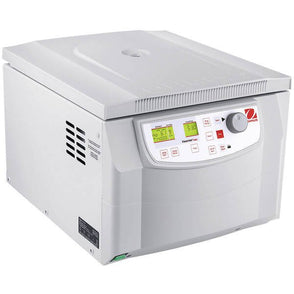
Ohaus - 30314817 - Frontier™ 5000 Multi-Pro Centrifuge 120V FC5816
-
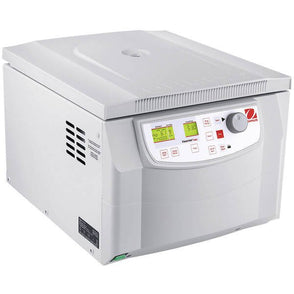
Ohaus - 30314816 - Frontier™ 5000 Multi-Pro Centrifuge 230V FC5816
-
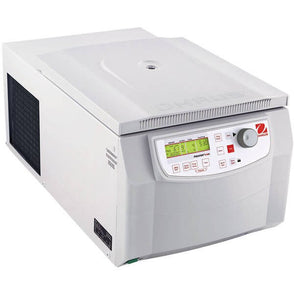
Ohaus - 30314815 - Frontier™ 5000 Multi-Pro Centrifuge 120V FC5718R
Clinical and Medical Laboratory Centrifuges
What do centrifuges do?
Centrifuges are laboratory devices that use centrifugal force to separate mixtures based on density differences. By rapidly spinning samples, they create a force that causes denser particles to settle at the bottom while lighter particles remain at the top. This separation is essential for many laboratory processes, including clinical diagnostics, pharmaceutical development, and molecular biology.
How do centrifuges work?
Centrifuges work by rotating samples around a central axis at high speeds. The centrifugal force generated by this motion pushes denser components outward, causing them to settle at the tube’s base, while lighter elements stay closer to the center. The rate of rotation (measured in RPM) and the centrifugal force applied (measured in RCF or “g-force”) determine the effectiveness of the separation process.
What is a centrifuge used for?
Centrifuges are widely used across various fields for tasks such as blood plasma separation, DNA and RNA purification, protein isolation, and cell culture processing. In clinical labs, they help in separating blood components, while in research settings, they assist in purifying molecular samples or concentrating biological materials.
What are the different types of centrifuges?
There are several types of centrifuges, each suited for specific applications:
-
-
Microcentrifuges: Small, often used for small sample volumes (e.g., DNA/RNA).
-
Benchtop centrifuges: Compact and versatile, suitable for routine lab work.
-
Refrigerated centrifuges: Include a cooling feature to protect heat-sensitive samples.
-
High-speed and ultracentrifuges: Designed for applications requiring extremely high g-forces, often used in molecular biology.
-
Large-capacity centrifuges: Capable of processing large sample volumes, useful in blood banks or industrial applications
-
What is the difference between a refrigerated centrifuge and a regular centrifuge?
A refrigerated centrifuge has a cooling system that keeps samples at a specific temperature during centrifugation, which is critical for samples sensitive to heat generated by high-speed spinning. In contrast, a standard (or ventilated) centrifuge lacks temperature control, making it suitable for samples that do not degrade with heat.
Which is better: ventilated or refrigerated centrifuge?
The choice between a ventilated and a refrigerated centrifuge depends on the sample type and application. Refrigerated centrifuges are essential for handling temperature-sensitive samples (such as proteins and live cells), ensuring sample integrity. Ventilated centrifuges are ideal for routine tasks where cooling is unnecessary, and they are generally more affordable and simpler to operate.
Laboratory Equipment Company offers a variety of centrifuge models suited for both routine and specialized applications, including refrigerated, high-speed, and benchtop centrifuges, designed to meet the demands of modern laboratory environments.