CO2 vs. LN2 Backup Systems: Which is Right for Your Lab?
When a power outage strikes or a primary compressor fails, the temperature inside an ultra-low temperature (ULT) freezer will immediately begin to rise. Without an active cooling mechanism, critical biological samples, cell lines, and vaccines are at risk of catastrophic degradation. To mitigate this risk, facilities rely on automated backup systems that inject secondary coolants directly into the freezer cabinet.
The two most common refrigerants used for these emergency systems are liquid carbon dioxide (CO2) and liquid nitrogen (LN2). Choosing the correct system depends entirely on your specific temperature requirements and facility infrastructure. In this guide, Laboratory Equipment Company (LEC) breaks down the differences between CO2 and LN2 backup systems to help you protect your valuable research.
Understanding CO2 Backup Systems
Carbon dioxide backup systems are widely used due to their cost-effectiveness and general availability. These systems utilize high-pressure cylinders of liquid CO2. When the freezer's internal sensors detect a temperature breach, a solenoid valve opens, pulsing the liquid CO2 into the cabinet.
While stored under high pressure, the effective CO2 liquid temperature upon injection and expansion drops to -78.5 degrees Celsius (sublimating into dry ice snow). Because of this physical limit, a CO2 backup system cannot maintain a freezer at -86 degrees Celsius. It is strictly designed to hold the cabinet temperature at approximately -70 degrees Celsius.
Facility managers frequently ask, "how long does CO2 last during an emergency?" The answer depends on the size of the cylinder, the ambient room temperature, and the size of the freezer. However, a standard 50-pound CO2 cylinder typically provides 12 to 24 hours of backup cooling. It serves as a temporary bridge until primary power is restored or the samples can be relocated.
What is LN2 and How Does it Work?
For researchers storing highly sensitive materials that must remain at -86 degrees Celsius, CO2 is insufficient. This is where liquid nitrogen becomes necessary.
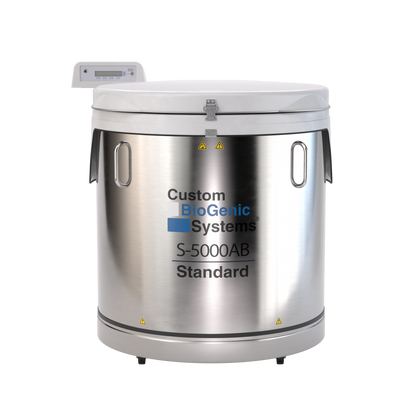
For those asking, "what is LN2?", it is simply nitrogen gas that has been cooled to its liquid state. It boasts an incredibly low boiling point of -196 degrees Celsius. When injected into a ULT freezer, it flashes into a gas, rapidly absorbing heat and driving the internal temperature down instantly. Because its cooling capacity is so extreme, an LN2 backup system can effortlessly maintain a set point of -86 degrees Celsius or colder.
Choosing Between CO2 and LN2 Freezers
Selecting the right backup system requires evaluating your sample tolerance and infrastructure limitations.
If your ultra-low temperature freezers are set to -70 degrees Celsius, a CO2 system is generally the most practical and economical choice. CO2 cylinders are easy to source, and the piping requirements are relatively standard.
Conversely, if your samples will degrade at -70 degrees Celsius, you must utilize LN2. Dedicated LN2 freezers and backup systems require specialized handling. Because LN2 is so cold, it requires insulated, vacuum-jacketed transfer hoses to prevent the liquid from boiling off before it ever reaches the freezer. Additionally, facilities utilizing LN2 must install proper oxygen depletion monitors, as expanding nitrogen gas displaces oxygen in enclosed laboratory spaces.
Protecting Your Critical Assets
An emergency backup system is only effective if it is properly configured for your specific equipment. Whether you are outfitting a single ULT freezer or designing a facility-wide cryogenic storage room, contact Laboratory Equipment Company (LEC) today. Our specialists can help you determine the exact backup cooling infrastructure required to keep your samples safe during any disruption.