Lab Fume Hoods
Fume Hoods for Pharmacy and Chemical Labs
-
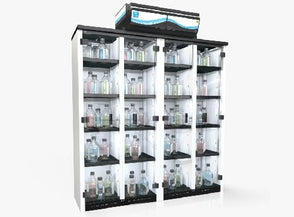
Erlab - CaptairStore 1634 Filtering Chemical Storage Cabinets with Double Doors V1
-

Erlab - CaptairStore 1634 Filtering Chemical Storage Cabinets with Pull Out Doors V2
-
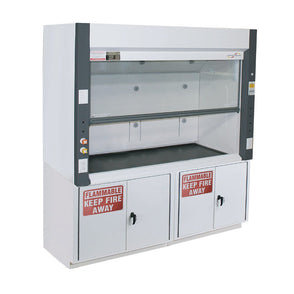
Flow Sciences - SAF-T FLOW™ - Fume Hoods
-

Erlab - Captair 632 Ductless Filtering Fume Hood
-

Erlab - Captair 714 Ductless Filtering Fume Hood
-

Erlab - Captair 321 Ductless Filtering Fume Hood
-

Erlab - Captair 483 Ductless Filtering Fume Hood
-

Erlab - Captair 481 Ductless Filtering Fume Hood
-

Erlab - Captair 392 Ductless Filtering Fume Hood
-

Erlab - Captair 391 Ductless Filtering Fume Hood


Laboratory Exhaust Fume Hoods
What are lab fume hoods?
Lab fume hoods are ventilated enclosures designed to protect laboratory workers from exposure to hazardous fumes, vapors, and dust. These hoods create a controlled airflow that draws contaminants away from the user and into an exhaust system, ensuring a safe environment for handling chemicals and performing experiments.
What is the OSHA laboratory standard for fume hoods?
The Occupational Safety and Health Administration (OSHA) recommends that fume hoods in laboratory settings maintain an airflow velocity of at least 80-120 linear feet per minute (fpm). This ensures effective containment of hazardous substances. Regular testing and certification are required to maintain compliance with OSHA standards, which Laboratory Equipment Company can assist with when selecting and maintaining lab equipment
What is the difference between a laboratory fume hood and a biosafety cabinet?
The primary difference is their purpose. A laboratory fume hood is used to vent harmful chemical fumes, vapors, or particles outside the lab, protecting personnel from inhalation hazards. In contrast, biological safety cabinets are designed to provide a sterile work environment, preventing contamination of biological samples and protecting both the operator and the environment from pathogens. Fume hoods are typically used in chemistry labs, while biosafety cabinets are used in biological or microbiological labs.
What are the different types of fume hoods?
There are several types of fume hoods, including:
-
Ducted Fume Hoods: Traditional ducted fume hoods connect directly to an external facility exhaust system. They include Constant Air Volume (CAV) hoods that maintain steady airflow and Variable Air Volume (VAV) hoods that adjust airflow based on sash height to optimize energy efficiency.
-
Ductless Fume Hoods: These self-contained ductless fume hoods use advanced carbon or HEPA filtration to purify contaminated air before recirculating it back into the laboratory, eliminating the need for external ductwork installation.
What are ductless laboratory fume hoods used for?
Ductless fume hoods are used in situations where traditional venting is not practical or possible. They use a filtration system to purify the air before recirculating it back into the lab. These hoods are ideal for labs handling non-volatile or low-level chemicals, offering the advantage of easy installation without external ductwork. For specialized tissue preparation workflows, dedicated ductless fume hoods for animal perfusion utilize targeted carbon media to safely absorb formalin and organic fixative vapors.