Freezer Boxes
-
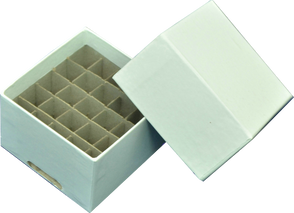
Crystal Industries - MB3C-25 - 3" Mini Box with 25 Cell Dividers
-

Crystal Industries - MB2C - White 2" Mini Box
-
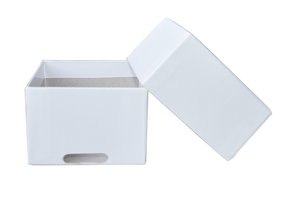
Crystal Industries - MB2C-25 - 2" Mini Box with 25 Cell Dividers
-
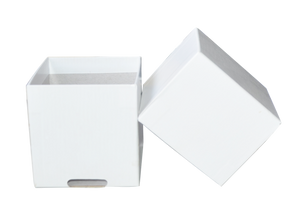
Crystal Industries - MB3C - White 3" Mini Box
-

Crystal Industries - SB10C - 10" Yellow Cardboard Box
-

Crystal Industries - SB4C-36 - 4.75" Cardboard Box with 36 Cell Dividers
-

Crystal Industries - SB4C-16 - 4.75" Cardboard Box with 16 Cell Dividers
-

Crystal Industries - SB4C - 4.75" Cardboard Box
-

Crystal Industries - SB3C-81 - 3" Cardboard Box with 81 Cell Dividers
-

Crystal Industries - SB3C-64 - 3" Cardboard Box with 64 Cell Dividers
-

Crystal Industries - SB3C-49 - 3" Cardboard Box with 49 Cell Dividers
-

Crystal Industries - SB3C-36 - 3" Cardboard Box with 36 Cell Dividers
-

Crystal Industries - SB3C-16 - 3" Cardboard Box with 16 Cell Dividers
-

Crystal Industries - SB3C-25 - 3" Cardboard Box with 25 Cell Dividers
-

Crystal Industries - SB3C-144 - 3" Cardboard Box with 144 Cell Dividers
-

Crystal Industries - SB3.75C-81 - 3.75" Cardboard Box with 81 Cell Dividers
-

Crystal Industries - SB3C - White 3" Cardboard Box
-

Crystal Industries - SB3C-100 - 3" Cardboard Box with 100 Cell Dividers
-

Crystal Industries - SB3.75C-49 - 3.75" Cardboard Box with 49 Cell Dividers
-

Crystal Industries - SB3.75C-64 - 3.75" Cardboard Box with 64 Cell Dividers


Freezer Boxes, Racks & Laboratory Storage Container FAQs
What materials are laboratory freezer boxes made of?
Lab freezer storage boxes are typically manufactured from three primary materials: water-repellent cardboard, polycarbonate (plastic), or aluminum. Cardboard freezer boxes are the most cost-effective and common solution for general -20°C and -80°C storage. They feature moisture-resistant coatings to prevent degradation from frost. Polycarbonate boxes offer greater durability and are entirely waterproof, making them ideal for heavy-use applications and frequent freeze-thaw cycles. Aluminum boxes provide the fastest thermal transfer and unmatched structural integrity, which is essential for extreme long-term archival.
Should I choose a 2-inch or 3-inch freezer box?
The height of your freezer box must correspond directly to the sample tubes you are storing. The standard 2-inch freezer box is universally designed to hold standard 1.5 mL and 2.0 mL microcentrifuge tubes or cryovials. If your laboratory relies on larger sample volumes, you will need to utilize 3-inch freezer boxes, which are engineered to accommodate taller 3.0 mL to 5.0 mL vials. Always ensure that your selected box height is compatible with the specific compartment dimensions of your facility's upright or chest racking systems.
Are these freezer boxes compatible with liquid nitrogen storage?
While cardboard boxes can technically be used in the vapor phase of liquid nitrogen (-150°C), they are generally not recommended for direct submersion in the liquid phase (-196°C) as they can degrade over time. For direct LN2 submersion, laboratories should use polycarbonate boxes or stainless steel storage solutions. Additionally, any box placed in liquid nitrogen must feature designated drain holes. As the box is lifted out of the LN2 dewars, the liquid nitrogen must be able to drain rapidly to prevent the box from becoming a heavy, hazardous projectile as the liquid rapidly expands into a gas.
What cell divider configurations are available?
Cell dividers dictate how many individual sample tubes a single box can hold. A standard 5.25" x 5.25" footprint box most commonly utilizes an 81-place (9x9 grid) or a 100-place (10x10 grid) cell divider. The 81-place configuration provides slightly more room for gloved fingers to easily grip standard cryovials, while the 100-place configuration offers maximum storage density for high-capacity biobanking. If you are storing significantly larger vessels, such as 15ml and 50ml conical centrifuge tubes, you will need boxes with specific 16-place or 36-place divider inserts.